-2.png)

QUEZON CITY, Philippines — The Land Registration Authority (LRA) is preparing to adopt electronic notarization for land titling and registration, LRA Administrator Atty. Gerardo P. Sirios said in a webinar held in Quezon City on July 10, 2026, as the agency works to comply with the Supreme Court's e-notarization rules and give the real estate industry a faster, fully digital way to complete property transactions. Sirios also announced that the LRA is looking into blockchain, AI, and GIS technology for a future land titling system.
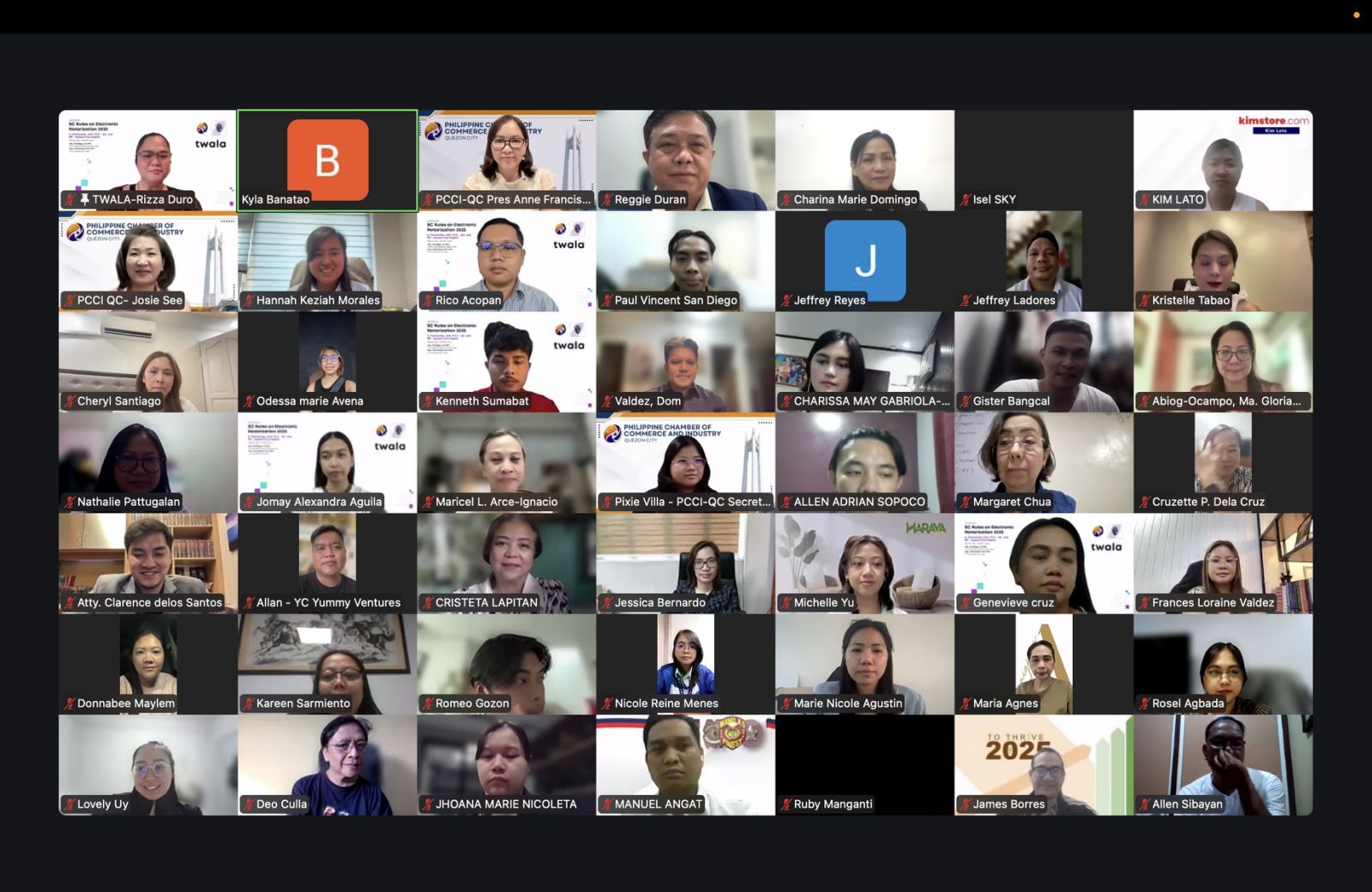
The webinar, titled "Sealing the Digital Future: eNotarization and the Philippine Real Estate Sector," was organized by the LRA in partnership with Twala, a Philippine legal-technology company specializing in electronic notarization and digital signatures, alongside the Integrated Bar of the Philippines (IBP) Quezon City Chapter, the Real Estate Brokers Association of the Philippines (REBAP), the Subdivision and Housing Developers Association (SHDA), the Organization of Socialized and Economic Housing Developers of the Philippines (OSHDP), and the Rural Bankers Association of the Philippines (RBAP), among other supporting organizations. Close to 800 participants joined the virtual event.
LRA Maps Out Its Path to E-Notarization Readiness
Administrator Atty. Gerardo P. Sirios identified four challenges the agency must overcome before it can fully implement electronic notarization and issue digital titles: the absence of a clear policy on accepting paper versus electronic documents; the need for allied government agencies — including the Department of Environment and Natural Resources, the Department of Agrarian Reform, the National Commission on Indigenous Peoples, local government units, and the Bureau of Internal Revenue — to synchronize their own systems with the LRA's; the agency's aging registration software, developed in the early 2010s; and public acceptance of digital titles, particularly among Filipinos in rural areas who continue to place high value on physical title documents.
To work through these gaps, Administrator Atty. Gerardo P. Sirios said the LRA has already sent a position paper to the Supreme Court and plans to use the ongoing budget season to seek support from lawmakers for legislation that would complement the Court's e-notarization rules.
"We are really very excited. We have sent our position paper to the Supreme Court to address these issues, and we will also take advantage of the budget season to talk to our lawmakers and seek their support in coming up with laws that will complement this," Sirios said.
He said the initiative forms part of the LRA's broader modernization drive, undertaken in compliance with the President's directive, and described it as a move beyond the agency's current "e-title" format — which he said is not yet a fully digital title — toward a system capable of issuing purely digital titles, while continuing to make paper titles available for Filipinos who prefer them.
Also on the Table: Blockchain, GIS, and AI for a Future Titling System
Alongside its e-notarization preparations, Administrator Atty. Gerardo P. Sirios disclosed that the agency has received an unsolicited proposal for a future online titling and registration system that would draw on blockchain, geospatial information system (GIS), and artificial intelligence (AI) technologies, citing Estonia, Georgia, and other Eastern European countries, as well as New Zealand, Australia, and Singapore, as jurisdictions already using similar technology in land administration.
Administrator Atty. Gerardo P. Sirios detailed the LRA's existing digital infrastructure, which safeguards more than 20 million land titles and supporting documents through more than 180 Registries of Deeds nationwide, most of which are now online. He said the agency recorded roughly ₱11 billion in collections last year across more than 6 million transactions, and pointed to existing modernization efforts including the Personal Property Security Registry, a cashless payment system, an online portal for certified true copies of titles, and the CLRP facility that allows large developers and banks to directly encode client transactions.
From Legal Framework to Practical Application
Atty. Third Bagro, Twala co-founder and General Counsel, opened the technical portion of the program with a walkthrough of the Supreme Court's rules on electronic notarization, tracing why, despite widespread digital adoption in banking and other sectors, most legal and property transactions in the Philippines still end in a paper document that must be signed or notarized.
Atty. Third Bagro said Twala was founded in 2020 on the premise that digitalization efforts fail when they do not address that "end product" — the signed and notarized paper itself — and that five years on, the passage of the Supreme Court's eNotarization rules represents significant progress toward solving it.
Engr. Jeffrey Reyes, Twala co-founder and Chief Executive Officer, followed with a technical presentation on the requirements of an Electronic Notary Facility (ENF) under the Supreme Court rules, grouped into four categories: platform requirements covering in-person and remote notarization; identity verification; data privacy and security; and infrastructure.
Engr. Jeffrey Reyes said Twala's platform supports both notarization modes required under the rules, uses blockchain-anchored, PKI-based digital signatures issued through a globally recognized trust service provider on the Adobe Approved Trust List, and applies AI-powered liveness detection and anti-spoofing safeguards to verify signatories in real time. He added that all notarized documents and electronic notarial books are automatically and continuously transmitted to a Supreme Court database, with the rules requiring 99.9% system uptime.
Engr. Jeffrey Reyes disclosed that Twala has been in discussions with the Supreme Court since 2020 on the framework for the eNotarization rules and is now undergoing formal accreditation with the Court, which the company expects to receive within the next few weeks or months — the milestone that would allow electronic notarization to become operational nationwide. He said Twala, a seed-funded startup supported by the Department of Science and Technology and the only Philippine member of the global Cloud Signature Consortium, now serves thousands of individual users from the private sector, with existing partnerships spanning the IBP, the Senate and House of Representatives technical working group on government document digitalization, the Philippine Economic Zone Authority, and the Anti-Red Tape Authority, among other institutions.
Industry Groups Voice Support
"We stand at a watershed. The Supreme Court's rules on electronic notarization are not a proposal, not a pilot — this is now the law, and it is being implemented," said Carla Abegail B. Calleja, National President of REBAP, in her remarks. "REBAP stands in full support of this transformation."
Carla Abegail B. Calleja said electronic notarization stands to significantly shorten closing timelines and allow overseas Filipino workers and other clients abroad to complete transactions remotely rather than through embassy or consulate visits. She said REBAP will continue training its brokers nationwide to guide clients through the transition, while also pressing for licensed brokers to be recognized on the documents they help facilitate.
"We in the rural banking industry are all for the ease of doing business. What Twala is doing with the Supreme Court is something very commendable, and we hope it can be implemented and up and running sooner than later," said Atty. Patrick Bryan E. Absin, President of RBAP.
Atty. Gerwin A. Panghulan, Executive Director of OSHDAP, delivered the closing remarks on behalf of the organizers, calling on regulators to ensure clear and predictable implementation guidelines, interoperability between electronic notarization and existing government digital systems — including those of the LRA, the Department of Human Settlements and Urban Development, and the Home Development Mutual Fund (Pag-IBIG Fund) — and continued affordability, particularly for socialized housing transactions.
"Electronic notarization is not simply about digitizing documents, it is about modernizing how we deliver public service," Panghulan said. "The true measure of digital transformation is not how much technology we adopt, but how much easier we make it for Filipinos to exercise their legal rights, complete important transactions with confidence, and ultimately achieve the dream of owning a home."